
If you’re considering a block paving project but don’t have access to a wacker plate, you may be wondering if it’s still possible to achieve great results. The good news is, there are alternative methods available that can help you lay block paving without a wacker plate. Let’s explore these options and find the best solution for your DIY project.
One popular alternative to a wacker plate is a hand-tamper. This tool consists of a heavy metal plate attached to a long pole. To use it, you simply strike the ground with the metal plate while walking across the project area. Hand-tampers are affordable, but keep in mind they can be labor-intensive, so they are best suited for smaller projects.
Another option to consider is a rolling tamper. This tool utilizes a large barrel filled with water or sand, attached to an angled handle. By rolling the heavy barrel across the surface, you can achieve a dense and level base with less physical effort. Rolling tampers are cheaper than wacker plates and can be rented from hardware stores, making them a cost-effective choice.
For narrow areas or projects that require compacting a deeper amount of soil or aggregate, a mechanical rammer, also known as a jumping jack, can be used. These tools have a smaller tamping plate than a wacker plate, making them more suitable for tight spaces and deep foundations. However, it’s important to note that mechanical rammers can be expensive, so consider your budget before opting for this method. Regardless of the alternative method you choose, it’s crucial to emphasize the importance of proper compaction.
Failing to compact the sub-base adequately can lead to various issues, including subsidence, poor drainage, and shifting or damaged pavers. Therefore, it’s necessary to assess the size and requirements of your project before deciding on the most suitable compaction method.
Remember, block paving is a fantastic way to enhance the appearance of your driveway or patio. By exploring alternative compaction methods and considering your project’s size and budget, you can achieve beautiful results even without a wacker plate. So don’t let the absence of a specific tool hold you back from creating the outdoor space of your dreams.
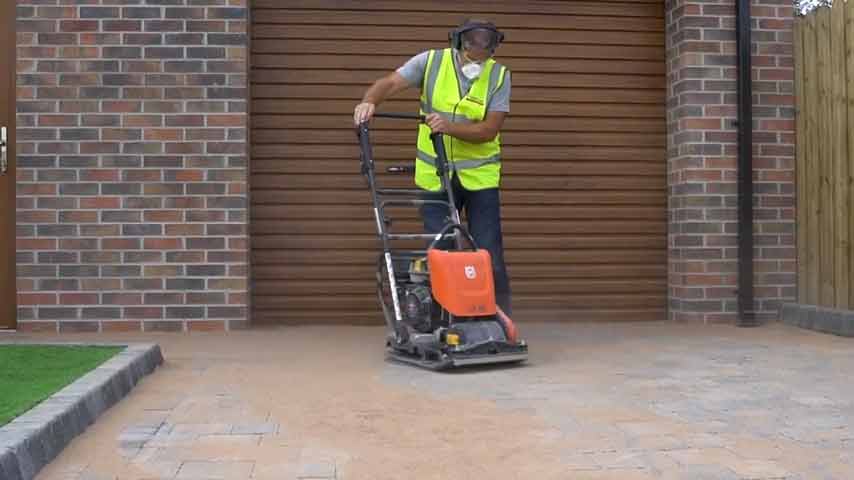
Alternative Methods for Laying Block Paving
Fortunately, there are alternative methods that can be used to lay block paving without a wacker plate, catering to different project needs and constraints. One such option is a hand-tamper, a simple yet effective tool consisting of a heavy metal plate attached to a long pole. By striking the ground with the metal plate while walking across the project area, a compact sub-base can be achieved. Hand-tampers are relatively inexpensive and readily available, making them a suitable choice for smaller projects where budget is a consideration.
Another alternative to a wacker plate is a rolling tamper. This tool features a large barrel filled with water or sand, attached to an angled handle. By rolling the heavy barrel back and forth across the surface, a dense and level base can be achieved with less physical effort compared to manual tamping. Rolling tampers are cheaper than wacker plates and can often be rented from local hardware stores, providing a cost-effective solution for DIY enthusiasts.
For projects that require compacting a deeper amount of soil or aggregate, a mechanical rammer, also known as a jumping jack, can be used. These tools have a smaller tamping plate compared to a wacker plate, which makes them better suited for tight spaces and deep foundations. While mechanical rammers can be more expensive to purchase or rent, they offer the advantage of versatility and maneuverability in challenging areas.
Alternative Methods for Laying Block Paving
| Method | Pros | Cons |
|---|---|---|
| Hand-tamper | Inexpensive | Labor-intensive |
| Rolling tamper | Cheaper than wacker plates, can be rented | Physically demanding |
| Mechanical rammer | Good for tight spaces, suitable for deep foundations | More expensive |
When it comes to laying block paving, proper compaction is crucial for a durable and long-lasting surface. Failing to compact the sub-base can result in issues such as subsidence, poor drainage, and shifting or damaged pavers. Therefore, it is necessary to assess the project size and budget before choosing a suitable compacting method. Whether it’s a hand-tamper, rolling tamper, or mechanical rammer, each alternative method offers its own advantages and considerations. By selecting the right tool for the job, DIY enthusiasts can achieve professional-looking results without the need for a wacker plate.
The Importance of Proper Compaction
It cannot be stressed enough how crucial proper compaction is when laying block paving – neglecting this step can lead to various problems that compromise the integrity and longevity of your paving project. In order to ensure a stable and durable surface, it is essential to compact the sub-base effectively. Failure to do so can result in issues such as poor drainage, subsidence, and shifting or damaged pavers.
When considering the compaction method for your block paving project, there are a few factors to take into account. Firstly, the size of your project plays a role in determining the most suitable approach. For smaller projects, a hand-tamper can be a cost-effective option. By striking the ground with the heavy metal plate attached to a long pole, you can achieve a decent level of compaction. However, it is important to note that hand-tampers can be labor-intensive and may not be as effective for larger areas.
Another alternative to a wacker plate is a rolling tamper. This tool utilizes a large barrel filled with water or sand, attached to an angled handle. By rolling the heavy barrel across the surface, a dense and level base can be achieved with less physical effort. Rolling tampers are cheaper than wacker plates and can be rented from hardware stores, making them a practical choice for many DIY enthusiasts. However, it is worth noting that for narrow areas or projects that require compacting a deeper amount of soil or aggregate, a mechanical rammer, also known as a jumping jack, may be more suitable.
Mechanical rammers have a smaller tamping plate than wacker plates, making them ideal for tight spaces and deep foundations. However, they can be more expensive than the previously mentioned alternatives. It is important to consider your project size and budget before deciding on the most appropriate compaction method. By choosing the right equipment and ensuring proper compaction, you can prevent issues like poor drainage, subsidence, and damaged pavers, and ultimately enjoy a long-lasting and visually appealing block paving surface.
| Compact Method | Pros | Cons |
|---|---|---|
| Hand-tamper | Inexpensive | Labor-intensive, less suitable for larger projects |
| Rolling tamper | Cheaper than wacker plates, can be rented | May not be as effective for compacting deeper soil or aggregate |
| Mechanical rammer | Suitable for tight spaces, deep foundations | More expensive than other alternatives |
Wrapping Up

When it comes to laying block paving without a wacker plate, it’s important to consider alternative methods such as hand-tampers, rolling tampers, or mechanical rammers depending on your project size and budget. Proper compaction is vital to ensure a robust and long-lasting surface for your block paving needs.
One option is a hand-tamper, which consists of a heavy metal plate attached to a long pole. This tool can be used by striking the ground with the metal plate while walking across the project area. Hand-tampers are inexpensive but can be labor-intensive, so they are best suited for smaller projects.
Another alternative is a rolling tamper, which uses a large barrel filled with water or sand attached to an angled handle. By rolling the heavy barrel across the surface, a dense and level base can be achieved with less physical effort. Rolling tampers are cheaper than wacker plates and can be rented from hardware stores.
For narrow areas or projects that require compacting a deeper amount of soil or aggregate, a mechanical rammer, also known as a jumping jack, can be used. These tools have a smaller tamping plate than a wacker plate, making them better suited for tight spaces and deep foundations. However, mechanical rammers can be expensive.
It is important to use a wacker plate or alternative compactor when laying any kind of surface designed to hold weight, as failing to compact the sub-base can result in issues such as subsidence, poor drainage, and shifting or damaged pavers. Therefore, it is necessary to assess the project size and budget before choosing a suitable compacting method.
Call us to get a price quote on a block paving. Contact us today on 07595 510190 to receive a free quote or visit our website.
Source Links
- https://www.northeastpavingandgardens.co.uk/what-can-i-use-instead-of-wacker-plate/
- https://www.thepavingexperts.co.uk/essential-tools-for-laying-block-pavers/
- https://www.machinesl.com/compact-pavers/

The well-known adage 'The foundation of a successful paver installation lies in the choice of materials' highlights the importance of Read more
Block paving is a popular choice for outdoor surfaces due to its durability and aesthetic appeal. However, the accumulation of Read more

Welcome to our guide on preventing weed growth and maintaining your block paved patio. We understand that keeping your patio free from Read more